

The Brothers That Just Do Gutters · Charleston
Hurricane season gutter prep for Charleston and the Lowcountry, before the tropics turn.
The National Hurricane Center runs the Atlantic season from June 1 to November 30 and puts its peak around September 10. In August 2024 Tropical Storm Debby left more than 18 inches on gauges near Summerville and Mount Pleasant, according to NWS Charleston. Your gutters decide whether rain like that leaves the roof or runs down the fascia, under a raised house and into the foundation. We clean, repair and storm-test them before the season peaks.
- Free written estimates
- Seamless gutters formed on site
- Serving Charleston and the Lowcountry
Quick answer
Hurricane Season Gutter Prep in Charleston, SC and the Lowcountry: Atlantic hurricane season runs June 1 to November 30, and the National Hurricane Center puts its peak around September 10, so Lowcountry gutters should be cleaned and repaired by midsummer. The Brothers That Just Do Gutters Charleston gets homes ready with a full hand cleaning, downspout flushing, seam sealing, re-secured hangers, slope and outlet corrections, added downspouts where one drop cannot keep up, drainage carried away from the foundation, and BroGuard metal mesh guards that keep pine straw and live oak leaves out. Estimates are free. Call (843) 867-2267 or book online.
By the numbers
Lowcountry storms are measured in feet of tide and inches of rain.
These four figures come from the National Weather Service office in North Charleston, which tracks every tropical system that reaches our coast. They are the Weather Service’s numbers, not ours.
- 19.06inof rain at a North Charleston station during Tropical Storm Debby, August 4 to 9, 2024, per NWS Charleston
- 18.47inches at a CoCoRaHS gauge northeast of Mount Pleasant in the same storm, per the NWS Charleston Debby report
- 9.92ftpeak storm tide in Charleston Harbor during Irma on September 11, 2017, third highest on record at the time
- 108mphwind gust measured in downtown Charleston during Hurricane Hugo, September 1989, per NWS Charleston
Sources: National Weather Service Charleston, SC post-tropical cyclone report for Tropical Storm Debby (2024); NWS Charleston event summaries for Tropical Storm Irma (2017) and Hurricane Hugo (1989); NOAA National Hurricane Center climatology.
What the Lowcountry has seen
Hugo, Irma and Debby each hit Charleston a different way.
Hurricane Hugo made landfall at Sullivan’s Island around midnight on September 22, 1989 as a Category 4 storm with winds estimated at 135 to 140 mph. NWS Charleston recorded a 108 mph gust downtown, storm tides of 15.0 feet above mean sea level at Isle of Palms and 10.4 feet in downtown Charleston, and 8.10 inches of rain in Mount Pleasant. Old live oaks came down across the area, including at Drayton Hall in West Ashley. In September 2017 Irma never made landfall here, yet it pushed Charleston Harbor to 9.92 feet, the third highest tide on record at the time. In August 2024 Tropical Storm Debby brought rain instead: 19.06 inches at a North Charleston station and more than 18 inches near Summerville and Mount Pleasant. Wind, water and rain. Your gutters only control one of the three, the rain, and they have to be ready before it starts.
Get storm-ready nowWhat it does to a Lowcountry house
A tropical system finds every weak point on your roofline.
Gutters are the drainage system for your roof. In an afternoon thunderstorm they get an hour of hard rain. In a tropical system they can get days of it, driven sideways by the wind.
- 01
Overflow at the fascia
A packed or under-pitched gutter sheets water over the back edge into the fascia board, the soffit and the roof deck. One wet season in Lowcountry humidity is enough to start the rot.
- 02
Water under raised homes
On a home built up on piers or pilings, a downspout that ends under the house soaks the ground floor, the stairs and whatever is stored down there. Every outlet needs a clear path out from under the structure.
- 03
Metal roofs that shed fast
Standing seam metal sends rain off the eave faster than shingles do. A gutter that is too small or hung too low gets overshot in a downpour, and the water lands at the foundation anyway.
- 04
Debris the storm brings down
Wind strips pine straw, live oak leaves and small limbs off the canopy and drops them straight into an open trough. A gutter that was clean in the morning can be packed by the time the heaviest bands arrive.
The pre-storm visit
Storm-ready in one visit, before the peak.
A Solutionist walks the whole roofline, then the crew does the work the same day whenever possible. You get a written report of what was cleaned, what was fixed and what we recommend before the heart of the season.
Book a Pre-Storm Inspection(843) 867-2267
- Same-daymost cleanings and repairs finished on the first visit
- Writtenreport and estimate before any work is approved
- Localcrews out of Mount Pleasant, local phone number: (843) 867-2267
- Clean and flush every runTroughs cleared by hand, downspouts flushed with water, outlets tested for flow.
- Seal seams and end capsLeaking corners and end caps resealed so wind-driven rain stays in the gutter, not behind it.
- Re-pitch and re-hangSagging runs re-sloped to the outlet and loose hangers replaced before storm winds and a full trough find them.
- Add downspouts where one cannot keep upLong roof sections draining to a single drop get a second outlet so they do not overflow in a tropical downpour.
- Move water away from the houseExtensions, splash blocks or underground drainage so roof water clears the foundation and the space under a raised home.
- Install BroGuardFine metal mesh that keeps pine straw and live oak leaves out through storm season and keeps you off the ladder.
Official guidance
South Carolina’s own hurricane guide puts the gutters on the to-do list.
The South Carolina Emergency Management Division publishes a hurricane guide every year, and its 2026 edition lists cleaning gutters and downspouts among the home preparations to make before a storm. The National Hurricane Center sets the calendar.
SCEMD 2026 Hurricane Guide
“Clean gutters and downspouts”
The guide’s home preparation advice says to clean gutters and downspouts “to prevent water buildup and reduce the risk of damage from heavy rain and debris.”
SCEMD 2026 Hurricane Guide
Even Category 1 hits gutters
For the weakest hurricane category, 74 to 95 mph, the guide lists “some damage to roofs, siding, gutters, and trees.” Hangers that are already loose are the first to let go.
NOAA National Hurricane Center
Peak on September 10
The season runs June 1 to November 30, and most activity falls between mid-August and mid-October. That makes late spring and early summer the window to get Lowcountry gutters done.
SCEMD 2026 Hurricane Guide
A watch is only 48 hours
A hurricane watch is issued 48 hours ahead of the anticipated onset and a warning 36 hours ahead. By then the job is securing the house and following your evacuation zone, not climbing a ladder.
Sources: S.C. Emergency Management Division, 2026 South Carolina Hurricane Guide, NOAA National Hurricane Center.
Checklist
Your hurricane season gutter checklist for Charleston and the Lowcountry
This is the same list our crews work through on every pre-storm visit. Do what you can from the ground, and call us for anything that needs a ladder.
- Clear every gutter by handPine straw, live oak leaves, oak catkins and the spring pollen coat turn into a dense mat in the trough and hold water against the fascia.
- Flush and test every downspoutA downspout packed at the elbow backs water up into the gutter and over the front edge, usually right above a door or a porch.
- Check pitch, hangers and seamsWater still standing after a flush means a sagging run or a loose hanger. Drips at the corners mean a failed seam. Both get worse in wind.
- Size up the valleysWhere two roof planes meet, water arrives faster than a 5 inch gutter can carry in a tropical downpour. A 6 inch gutter or an added downspout fixes it.
- Move the water away from the houseSend every downspout at least 5 feet out with an extension, splash block or underground line, and on a raised home carry it past the edge of the structure.
- Check the metal roofs and porchesStanding seam roofs, porch roofs and pool house roofs shed water fast onto short gutter runs. Make sure each run is big enough and set where the water actually lands.
- Protect the troughBroGuard fine metal mesh keeps pine straw and leaves out between cleanings, so the gutter is open when a rain band arrives in the middle of the night.
- Finish before the peakThe National Hurricane Center puts the peak around September 10. Our schedule fills once a storm shows up in the forecast, so get on it in May, June or July.
Sources: S.C. Emergency Management Division 2026 Hurricane Guide, NOAA National Hurricane Center climatology and season dates.
Raised homes and the islands
On a raised home, the gutter decides where the water lands.
Plenty of Lowcountry homes sit up on piers or pilings, from Isle of Palms and Sullivan’s Island to Folly Beach and the marsh edges of James Island and Johns Island. They are built that way for a reason. During Hugo in 1989, NOAA and the National Weather Service measured storm tides of 15.0 feet above mean sea level at Isle of Palms, 13.0 feet at Sullivan’s Island and 11.9 feet at Folly Beach. No gutter holds back storm surge, and nothing on a roofline should be part of a surge plan. What the gutter controls is the rain. On a raised house the downspouts drop a full story or more, the straps take the wind, and an outlet that empties under the house washes out the ground and soaks the stairs and storage. We strap every drop to the structure, carry the water past the edge of the house, and flush buried lines that fill with sand.
Sources: NWS Charleston, Hurricane Hugo event summary, NWS Charleston Tropical Storm Irma event summary.
Services
More Ways We Help Charleston Homeowners
Related services from the same local crews.
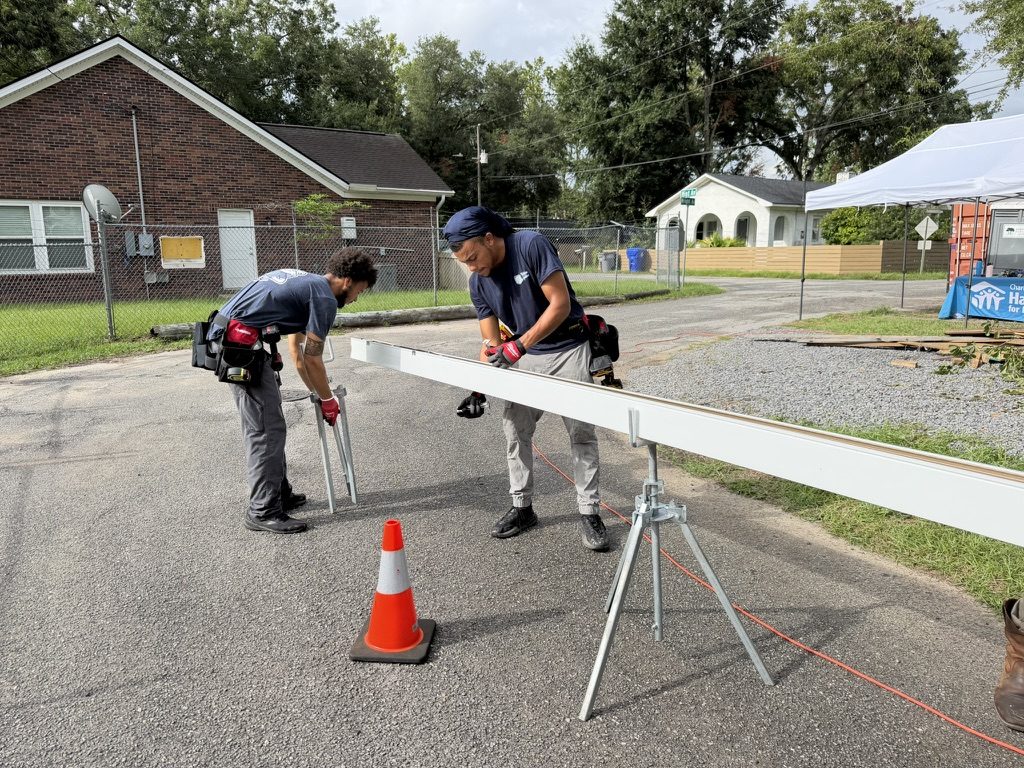
Aluminum, copper and half-round gutters formed on site to the exact length of your roofline. No seams to leak, matched to your trim.
Learn more Gutter CleaningGutters and downspouts cleared by hand, flushed and tested. We do not blow pine straw onto your porch or patio.
Learn more Gutter RepairLeaking seams, sagging runs, storm-loosened hangers and rotted fascia, repaired the same visit when possible.
Learn more BroGuard Gutter GuardsFine metal mesh that stops pine straw, live oak leaves and pollen while heavy rain flows through. Limited lifetime warranty.
Learn more Underground DrainageDownspouts tied into buried lines that carry roof water away from the foundation, piers, walkways and patios.
Learn more Maintenance ProgramScheduled cleanings before and after storm season so your system is ready when the tropics turn active.
Learn moreHow it works
What Happens on a Pre-Storm Visit
- 1Pick a date
Call or book online and we set the visit well ahead of the peak.
- 2Clear by hand
The crew scoops each trough and bags everything that comes out.
- 3Flush and watch
Water goes down every downspout until it runs clear at the bottom.
- 4Report and sweep
You hear about anything worn or loose, and the walks get swept.
Why the Brothers
Why Charleston and Mount Pleasant Homeowners Call the Brothers
Debris comes out by hand and leaves in bags. Your porch, windows and siding stay clean.
Because the work is done by hand, someone trained is looking at every foot of the run. Small adjustments happen on the spot, and bigger fixes go on a written estimate.
The National Hurricane Center puts the peak of the season around September 10, and calls pile up the moment a storm shows up in the forecast. Booking early keeps you ahead of that line.
Gabe Gomez, a U.S. Marine Corps veteran, runs this franchise out of Mount Pleasant, so the crew on your roof knows what Lowcountry pines and live oaks drop and when.
Year-round
Your Charleston gutter calendar
How the year plays out on Lowcountry rooflines, and what our crews are doing in each stretch.
- Fall · Sep to NovPine drop clean-outs
Pine straw, oak leaves and sweetgum balls cleared from troughs and outlets while late-season storms are still rolling through.
- Winter · Dec to FebRepair and replacement
The calmer months for rehanging sagging runs, swapping out leaky sectional gutters and fixing fascia before spring.
- Spring · Mar to MayPollen and catkin season
Pine pollen and oak catkins flushed out of the outlets, and BroGuard installed before the summer storms arrive.
- Summer · Jun to AugThunderstorm season
The wettest stretch of the year. Overflow calls, downspout upgrades and new seamless gutters sized for the downpour.
The Work
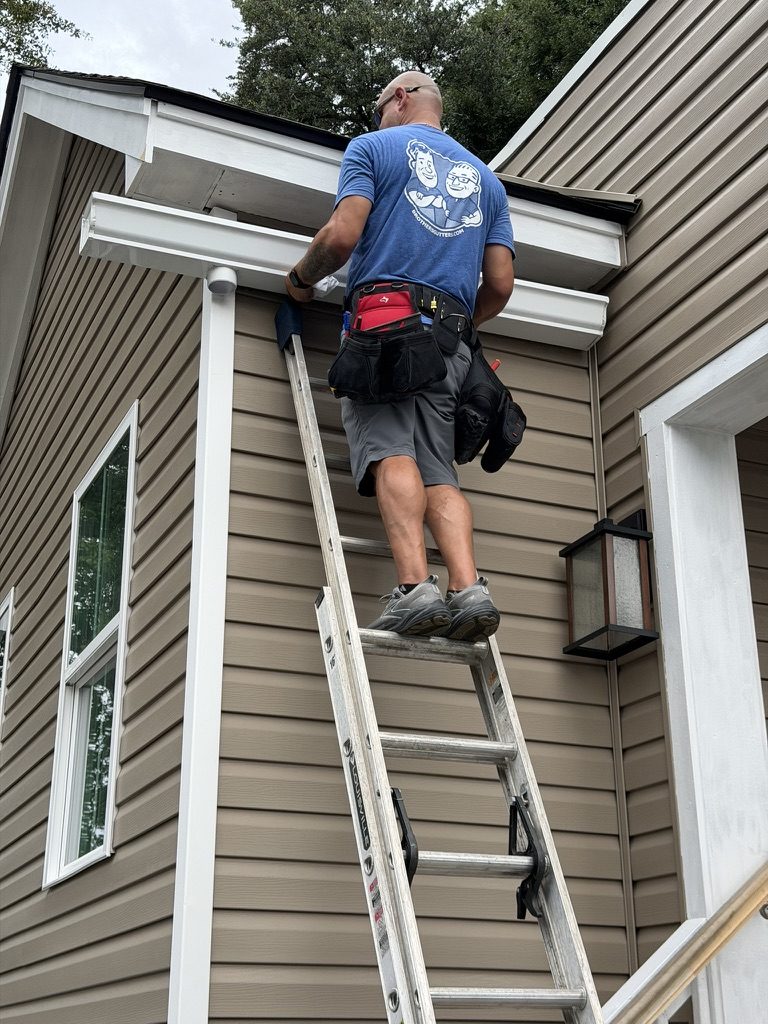
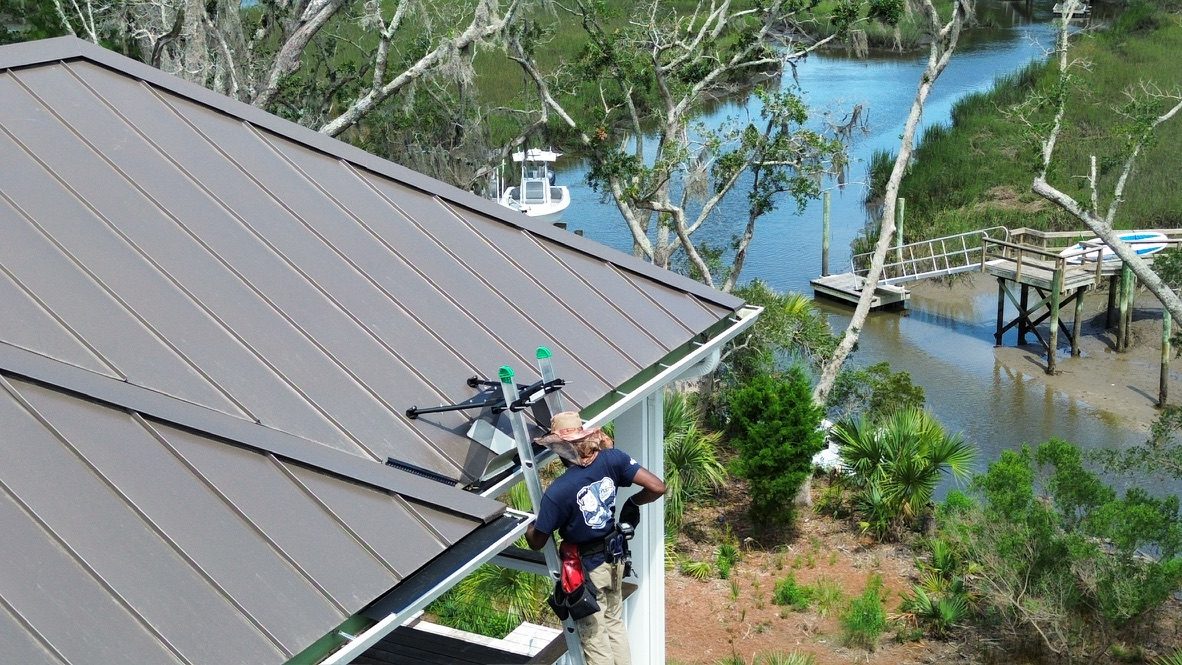
Real Crews. Real Charleston and Lowcountry Homes.
Reviews
What Charleston Homeowners Say
“Big thanks to Justin Jenkins from Brothers Gutters for the fast repair on my hanging gutter. Great price and even better customer service. I’ll definitely be using them again and will recommend them to all of my clients and neighbors!!”
Posted on Google“The Brothers that do Gutters are amazing! It’s been an outstanding experience from the very beginning! The price is great, customer service fantastic and installation crew without peer! I will and have recommended them to friends and family!”
Posted on Google“I asked them to come to my house to quote a gutter repair. While they could not fix it that day, they came back within a couple of days and fixed my gutter free of charge. You can’t ask for better service and nicer people. There is no doubt that the next time I need new gutters, TBTJDG will be who I call.”
Posted on GoogleService area
Charleston and Lowcountry communities we serve
Every community on this list is inside our service area and gets the same local crew, seamless gutters formed on site and free written estimates. Call (843) 867-2267 or request a free quote and a Solutionist will come out.
- Mount Pleasant
- Charleston
- West Ashley
- James Island
- Daniel Island
- North Charleston
- Hanahan
- Goose Creek
- Ladson
- Summerville
- Johns Island
- Folly Beach
- Isle of Palms
- Sullivan’s Island
- Awendaw
- McClellanville
Frequently Asked Questions
Atlantic hurricane season runs from June 1 to November 30, according to NOAA’s National Hurricane Center. The peak of the season is around September 10, and most activity falls between mid-August and mid-October. For Charleston homeowners, that makes late spring and early summer the best time to get gutters cleaned and repaired.
A lot more than a normal summer storm. During Tropical Storm Debby, August 4 to 9, 2024, the National Weather Service in Charleston recorded 19.06 inches at a North Charleston station, 18.66 inches near Summerville and 18.47 inches northeast of Mount Pleasant. The highest total in its report was 22.02 inches near Moncks Corner.
Start with a full hand cleaning and a flush of every downspout, then fix what the storm will find: leaking seams and end caps, loose hangers, sagging runs with the wrong slope, and long roof sections draining to a single downspout. Carry the water away from the foundation, and past the edge of the house on a raised home. BroGuard fine metal mesh keeps pine straw and leaves from refilling the trough.
Book it in May, June or July, well before the September peak. A hurricane watch comes only about 48 hours before a storm’s expected onset, which is not enough time to get on a crew schedule. A Solutionist walks the roofline, the crew does the work the same day whenever possible, and you get a written report. Call (843) 867-2267.
Yes. On a home built up on piers or pilings, downspouts drop a full story or more, so the straps holding them to the structure take more wind and need to be checked. Every outlet should carry water past the edge of the house instead of emptying under it, where it washes out the ground and soaks stairs and storage. Buried drain lines near the coast can fill with sand and need flushing.
Yes, and fast. Storm winds strip pine straw, live oak leaves and small limbs out of the canopy and drop them straight into an open gutter, so a clean trough can be packed before the heaviest rain arrives. BroGuard fine metal mesh keeps that debris on top of the guard while the rain runs through.
No. Storm surge is ocean water pushed ashore by the storm, and no gutter or downspout can stop it. During Irma in September 2017, NWS Charleston measured a peak storm tide of 9.92 feet in Charleston Harbor, the third highest on record at the time. Gutters handle rain, so the surge plan is your evacuation zone, which you can look up at hurricane.sc.
About 52.5 inches a year at Charleston International Airport, based on NOAA’s 1991 to 2020 normals. Close to half of it falls from June through September, much of it in afternoon thunderstorms. A tropical system on top of that can bring more than a third of a normal year’s rain in less than a week, as Debby did in 2024.
Look from the ground first: sagging runs, gutters pulled away from the fascia, downspouts knocked loose or crushed, and fresh staining on the siding. Stay off the ladder in wind and stay clear of downed lines. Then have a crew clear the storm debris, flush every downspout and re-secure the hangers before the next system arrives.
Hugo made landfall at Sullivan’s Island around midnight on September 22, 1989 as a Category 4 hurricane. NWS Charleston lists a 108 mph gust in downtown Charleston, storm tides of 15.0 feet above mean sea level at Isle of Palms and 10.4 feet downtown, and 8.10 inches of rain in Mount Pleasant. Many old trees came down across the area, including at Drayton Hall in West Ashley.
Yes. The South Carolina Emergency Management Division’s 2026 Hurricane Guide tells homeowners to “Clean gutters and downspouts to prevent water buildup and reduce the risk of damage from heavy rain and debris.” The same guide lists damage to roofs, siding and gutters even for a Category 1 storm.
They can be. A standing seam metal roof sheds rain off the eave faster than shingles, so in a downpour water can shoot past a gutter that is too small or hung too low. The fix is a properly sized gutter, often 6 inch, set where the water actually lands, with enough downspouts to drain it.
Free estimates
Ready for gutters that can handle a Lowcountry hurricane season?
Free, no-pressure estimates from local Solutionists. Pre-storm cleanings, repairs and BroGuard protection scheduled before the September peak, and seamless gutters formed at your home when a run needs replacing.
The Brothers That Just Do Gutters · Charleston · (843) 867-2267 · Based in Mount Pleasant, serving Charleston, SC and the Lowcountry
Veteran Owned & Operated in Mount Pleasant, SC · Serving Charleston, Berkeley & Dorchester Counties